

Dyrevernalliansen (the Norwegian Animal Protection Alliance) has reacted to the fur collars on three jackets from byTiMo’s autumn collection. Now the Norwegian fashion brand says it will not use fur in future collections.
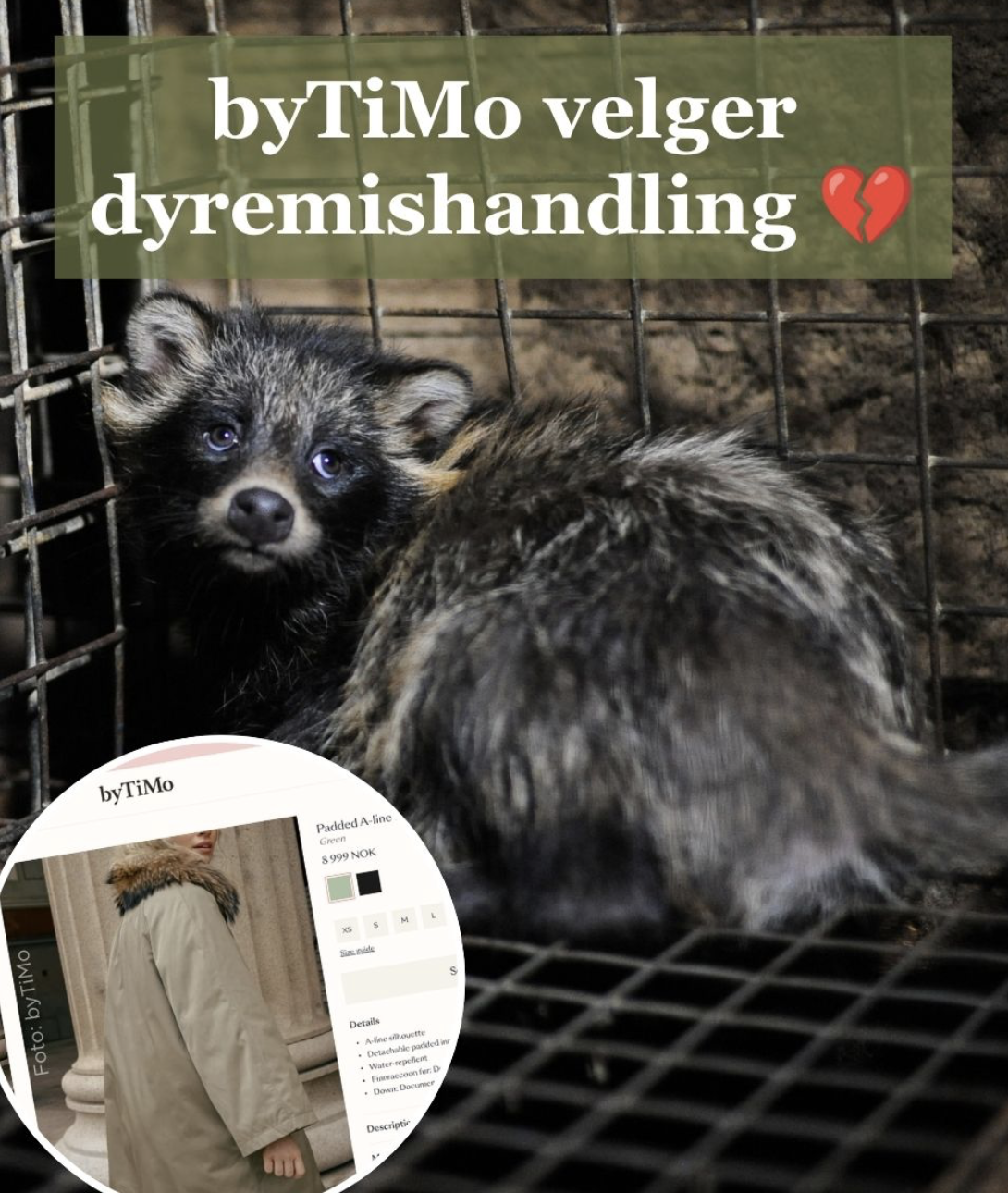
Fur is once again a talking point in fashion, and for byTiMo the choice of material has sparked immediate reactions. On Tuesday afternoon, Dyrevernalliansen published an Instagram post in which the organisation criticises the brand for selling jackets with raccoon dog fur collars.
In the post’s six images, Dyrevernalliansen criticises the conditions for animals in fur production. The organisation also points out that fur farming is banned in Norway, and calls for a ban on fur imports. Several people have expressed disappointment with byTiMo in the comments.

The organisation uses the pictures of caged animals to shed light on fur production in general. The post does not document that the animals pictured supplied fur for byTiMo’s jackets.
byTiMo apologisesIn a statement to Melk & Honning, byTiMo confirms that three jackets in this year’s autumn collection have fur collars. The brand says it has not used fur in previous collections.
– When we chose the fur for these three jackets, we did so trusting the certifications and documentation that accompanied the material from Saga Furs in Finland. We saw this as an assurance that strict requirements were in place for traceability and animal welfare. We now understand that this did not give us the assurance we thought it did, writes byTiMo.
The brand takes responsibility for the decision:
– We are sincerely sorry that this has happened. It is our responsibility to be sure of the materials we choose, and we apologise for making this choice, byTiMo writes in an email to Melk & Honning.
byTiMo says fur will not be used in future collections. The statement says nothing about whether the three jackets already produced will be withdrawn from sale.
Norway banned fur farming from 2025. The dispute over byTiMo’s jackets is therefore also about a question that remains relevant for Norwegian fashion brands: how should they approach fur produced outside Norway? We’ll keep following the debate.